

Text size:
About
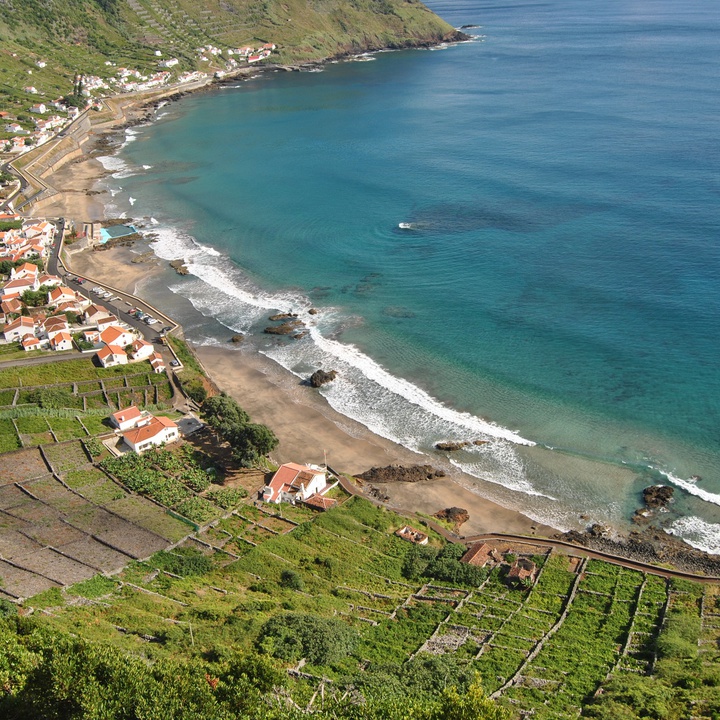

The Santa Maria Nature Park, created in 2008, brings together in a single territory the richness of the island’s natural history and the authenticity of its traditions. Santa Maria is the guardian of true geological treasures, standing out for its unique paleodiversity in the Azores archipelago.
Its fossil deposits, dating from the Miocene and early Pliocene (7 to 5 million years ago) and the Pleistocene (130,000 to 117,000 years ago), reveal ancient marine environments. On this island, it is possible to observe fossils of bivalves, whelks (gastropods), sea urchins and even shark teeth, preserved in volcanic formations — an exceptional testimony to the island’s geological evolution.
Santa Maria is distinguished by the oldest geological formations in the Azores, by the presence of five priority geosites of the Azores UNESCO Global Geopark, and by three areas classified in the Natura 2000 Network and a Ramsar Site of international importance.
The protected areas that make up the Nature Park bring together unique elements of fauna, flora, landscape and cultural heritage. In total, they include two Nature Reserves, one Natural Monument, four Protected Areas for the Management of Habitats or Species, three Protected Landscape Areas and three Protected Areas of Resource Management.
To better understand this heritage, the Nature Park offers visitors the House of Fossils // Dalberto Pombo Environmental Interpretation Centre, an interpretive circuit, a grand route and five walking trails.
To preserve this paleobiodiversity and ensure the integrity of the associated geological, natural and cultural values, the Santa Maria Paleopark was created in 2018. It comprises 20 fossil deposits, classified into three categories, all of which are part of the Nature Park.