

Text size:
News
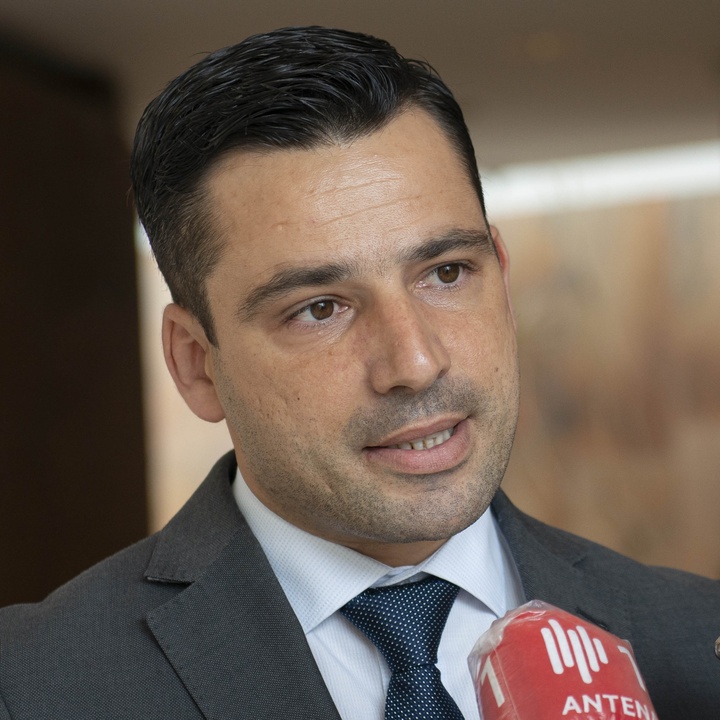
Regional Secretariat for the Environment and Climate Action joins project aimed at promoting environmental education and awareness on climate change
May 18, 2026
The Government of the Azores, through the Regional Secretariat for the Environment and Climate Action, has begun its participation in the European INTERREG VI D Madeira-Azores-Canary Islands (MAC) 2021–2027 project, “MAC-IDAFE_2CAP – Macaronesia Climate Action School Network in the Azores,” representing an overall investment of about €180,000, with 85% co-financed by the European Union.
The Regional Secretary for the Environment and Climate Action, Alonso Miguel, explained that “this project, which is part of a European transnational cooperation programme encompassing the Outermost Regions of the European Union, aims to promote environmental education and raise awareness of climate change in the Macaronesian regions – the Azores, Madeira, the Canary Islands and Cape Verde.”
According to the Regional Secretary, “initiatives will be developed in key areas such as the continuous training of teachers, the production of educational materials tailored to the specific characteristics of each territory, the organisation of participatory activities with basic education, secondary and vocational education students, and the implementation of a network of schools committed to climate action.”
Alonso Miguel emphasised that “environmental education is a shared responsibility, crucial to building a more aware, informed and responsible society.” In this regard, he added that “schools play an essential role in shaping citizens who are prepared to exercise active and critical citizenship committed to the future of the planet.”
The Regional Secretary emphasised that “the MAC-IDAFE project will build on the PLANCLIMAC and PLANCLIMAC2 projects, which have already established an innovative educational model on the Canary Islands for bringing climate change into school curricula.”
“This network will be a privileged space for collaboration, promoting the exchange of knowledge, the sharing of best practices and the joint development of innovative solutions among schools,” he added.
Alonso Miguel also highlighted that “the implementation of this project aims to develop the skills of teachers and students in environmental and climate action, encourage more sustainable practices and behaviours, and strengthen the resilience of island communities to tackle climate change challenges. These goals follow a guiding principle based on sustainability, equality and accessibility in each region, aligned with the Sustainable Development Goals defined by the United Nations.”
The Regional Secretary also pointed out that each region has defined its own target audience, “with this project in the Azores being aimed at the school community in the middle and junior high school levels. Although teachers and students are the main beneficiaries, the impact of this initiative extends to local communities, promoting a more informed, aware and committed citizenship to sustainability.”
Alonso Miguel emphasised that “this project involves five partner organisations from the Azores, Madeira, the Canary Islands and Cape Verde: the Government of the Canary Islands / Ministry of Ecological Transition and Energy, Gestión y Planeamiento Territorial y Medioambiental S.A. (Gesplan), the Regional Secretariat for Tourism, Environment and Culture of Madeira, the Regional Secretariat for the Environment and Climate Action of the Azores, and the National Institute of Meteorology and Geophysics (INMG) of Cape Verde.”
The Regional Secretary for the Environment noted that “environmental literacy is one of the fundamental pillars of the mission of the Regional Secretariat for the Environment and Climate Action, seeking to raise community awareness of environmental challenges, foster a sense of belonging and individual responsibility, and ensure the protection and enhancement of the Azores’ extraordinary natural heritage.”
Alonso Miguel pointed out that it is in this context that the Regional Secretariat for the Environment and Climate Action promotes awareness-raising initiatives for the school community through the School Environmental Awareness Activities Programme (OASAE), an initiative aimed at all schools across the region and organised annually.
“OASAE comprises 65 activities designed for all levels of education, including interpretation trails, games, exhibitions, educational games and guided tours to Environmental Centres, covering topics such as nature conservation, climate change, natural hazards, waste and the circular economy,” he added.
Alonso Miguel concluded by stating that “the Regional Government of the Azores hereby reiterates its commitment to an environmental policy based on knowledge, civic participation and sustainability, preparing present and future generations for environmental challenges and the promotion of sustainable development in the Azores.”